
What Is the Best Material for an Awning?
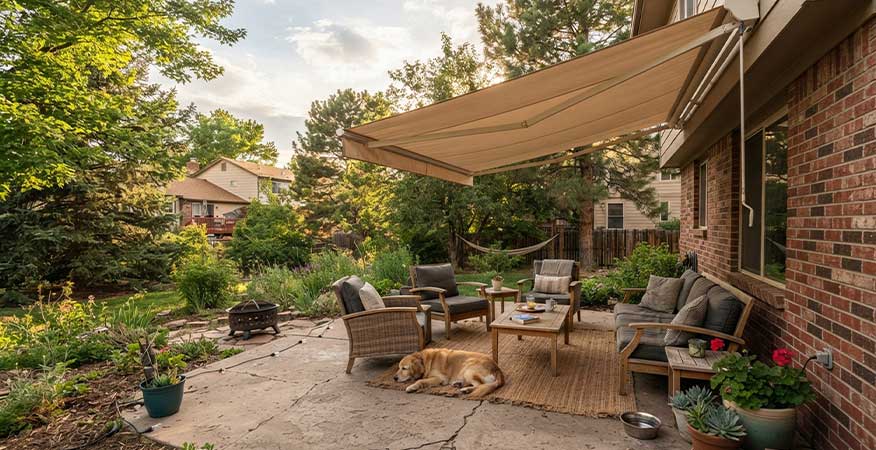
For most Colorado homes, solution-dyed acrylic fabric like Sunbrella is the best awning material because it resists high-altitude UV, breathes well, and holds color for 10 to 15 years. The ideal choice depends on specific needs - from retractable patios to hail-prone areas to commercial storefronts.
- Solution-dyed acrylic offers superior fade resistance and breathability but costs more than polyester or vinyl. Vinyl works best for commercial use since it is fully waterproof and holds printed graphics well.
- Aluminum awnings handle hail damage better than fabric and require minimal maintenance - a practical choice for hail corridors east of Denver. Canvas suits historic properties but needs frequent care and lasts only 5 to 8 years.
- Colorado's mile-high UV exposure is roughly 25 percent stronger than at sea level. Materials lasting 15 years in mild climates can fade or fail in half that time here.
The best material for an awning should be durable and weather-resistant, particularly in regions like Colorado that experience intense sunlight, snow, and wind. Commonly recommended materials include acrylic fabric, which is UV resistant, and aluminum, known for its strength and longevity, making them ideal choices for outdoor protection.
The short answer: for most Colorado homes, solution-dyed acrylic fabric (the material behind the Sunbrella brand) is the best awning material. It resists our high-altitude UV better than any other fabric, breathes enough to stay cooler underneath, and holds its color for a decade or more. But “best” depends on what the awning has to do – a south-facing retractable in Highlands Ranch, a fixed metal awning in a hail corridor, and a commercial storefront awning on Colfax each point to a different answer.
We have been installing and re-covering awnings along the Front Range since 1979. Here is the comparison we walk customers through.
Why material matters more in Colorado
Denver sits a mile above sea level, and UV exposure here is roughly 25 percent stronger than at sea level. Add 300-plus days of sun, spring hail, chinook winds, and wet snow, and materials that last 15 years in a mild climate can fade or fail in half that time here. Every recommendation below is filtered through that reality.
Awning fabrics compared
Solution-dyed acrylic (Sunbrella and similar) – the best all-around choice
Solution-dyed means the color is locked into the fiber itself before the fabric is woven, not printed on top. That is why acrylic keeps its color under Colorado sun long after other fabrics look chalky.
- Best for: retractable awnings, residential patios, anywhere appearance matters
- Strengths: superior UV and fade resistance, breathable (cooler shade), water-repellent, mildew-resistant, wide color and pattern range
- Weaknesses: costs more than polyester or vinyl; not fully waterproof
- Typical lifespan: 10–15 years in Colorado with basic care
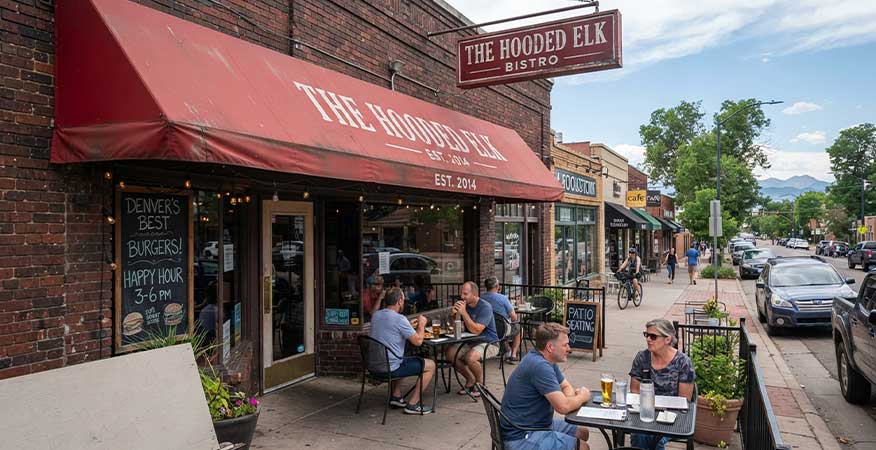
Vinyl (PVC-coated polyester) – the waterproof workhorse
Vinyl laminated over a polyester base is fully waterproof and easy to wipe clean, which is why it dominates commercial and restaurant installations.
- Best for: commercial awnings, drop shades, rain protection, backlit signage awnings
- Strengths: waterproof, durable, cleanable, holds printed graphics well
- Weaknesses: traps heat more than acrylic, can stiffen and crack after years of intense UV, fewer premium looks
- Typical lifespan: 8–12 years
Canvas (cotton or cotton blend) – the traditional look, with caveats
Canvas is the material awnings were born with, and nothing quite matches its character on a historic building. It is also the most maintenance-hungry option in our climate.
- Best for: historic properties and period-correct restorations
- Strengths: classic appearance, breathable, takes traditional stripes beautifully
- Weaknesses: absorbs water, prone to mildew, fades faster, needs re-treatment
- Typical lifespan: 5–8 years
Polyester – the budget option
Uncoated or lightly coated polyester is light and inexpensive, and for a seasonal or short-term application it does the job. For a permanent installation in Colorado sun, expect fading and stretch sooner than acrylic.
- Typical lifespan: 5–8 years
Metal and rigid awning materials
Aluminum – the low-maintenance survivor
Aluminum awnings shrug off hail that would shred fabric, never mildew, and need little more than an occasional rinse. The trade-offs: a fixed look, more heat radiated underneath, and noise in rain and hail. In hail-prone corridors east and northeast of Denver, aluminum is often the pragmatic choice. (For styling and upkeep, see our aluminum awning guide.)
Steel and other metals
Stronger and heavier than aluminum, used mostly in commercial and structural applications. Requires coating maintenance to prevent corrosion.
Polycarbonate and fiberglass
Rigid translucent panels that pass light while blocking UV – common over doors and walkways. Polycarbonate handles impact well; cheaper fiberglass can yellow and become brittle with age.
Eco-friendly awning materials for homes and businesses
Two developments matter if sustainability drives the decision. First, solution-dyed acrylic production uses less water and dye waste than piece-dyed fabric, and its longevity is itself an environmental advantage – the greenest awning is the one you replace half as often. Second, several manufacturers now offer recycled-content polyester and PVC-free waterproof fabrics for commercial projects. For commercial installations we can also spec fabrics with documented environmental certifications on request.
An awning of any material also reduces cooling load: shading glazing directly can cut solar heat gain dramatically, which is why properly shaded buildings see meaningfully lower summer cooling costs.
Which material for which situation – quick reference
| Situation | Our recommendation |
|---|---|
| Retractable patio awning | Solution-dyed acrylic |
| Restaurant or storefront | Vinyl (waterproof, printable) or acrylic for premium looks |
| Hail-exposed, low maintenance | Aluminum |
| Historic building | Canvas (with a maintenance plan) or acrylic in period colors |
| Door or walkway cover | Polycarbonate or aluminum |
| Tight budget, short horizon | Polyester |
Since 1979, Best Awning Company has installed and re-covered every material above across the Denver metro and foothills. Call 303‑816‑2303 for a free consultation, or browse our awning gallery.
Recent Post
How to Clean Aluminum Awnings: Step-by-Step Guide to Remove Dirt, Stains, and Oxidation Without Causing Damage
Aluminum awnings protect your home from the sun, rain, and...
Retractable Awning Maintenance Tips: Expert Guide to Cleaning, Protecting, and Extending the Life of Your Awning
A retractable awning is a valuable investment that adds shade,...
20 Deck Awning Ideas Perfect for Patio Season: Stylish Shade Solutions to Elevate Outdoor Comfort, Design, and Functionality
Deck awnings are one of the most effective upgrades for...
Can Retractable Awnings Be Installed on Vinyl Siding? Expert Guide to Safe Installation, Structural Support, and Best Practices
Retractable awnings can be installed on homes with vinyl siding,...


