
Installing a Business Awning: 8 Things to Get Right First
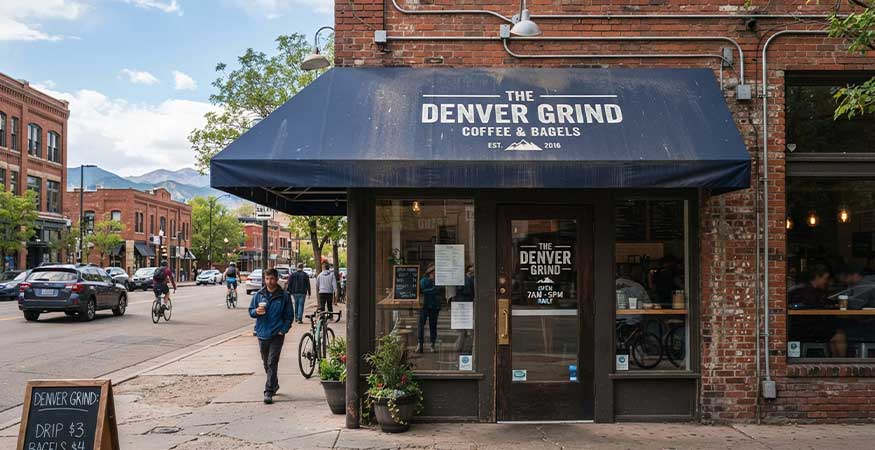
A business awning serves as signage, weather protection, and an energy fixture - and mistakes stay visible for a decade. These eight decisions, based on 45 years of Denver metro commercial installs, separate a profitable awning from a regrettable one.
- Define the awning's purpose first since branding needs printable vinyl and back-lighting while seating areas need projection and drop screens. Check municipal sign codes before fabrication because logos trigger sign-code review and size restrictions.
- Match materials to the job - vinyl for branded storefronts, solution-dyed acrylic for cooler seating areas, and metal where hail is common. Mounting engineering matters since commercial walls hide framing behind various materials.
- For restaurants, covered outdoor seating adds revenue at roughly $50 per square foot and extends table-turns into shoulder seasons. Schedule maintenance at purchase including quarterly cleaning and annual inspections to prevent fading.
Before installing a business awning, you need to address eight key decisions that affect its long-term performance. These include evaluating the awning's role as signage, weather protection, and energy management. Since commercial awnings typically remain on your storefront for about a decade, getting these factors right from the start prevents costly regrets and helps the investment pay off.
A business awning is signage, weather protection and an energy fixture in one purchase – and a mistake in any of those roles stays bolted to your storefront for a decade. Here are the eight decisions that separate an awning that earns from an awning you resent, drawn from 45 years of commercial installs across the Denver metro.
1. Decide what the awning is for
Branding, shade, covered seating, or all three? The answer drives everything downstream. A branding awning wants printable vinyl and back-lighting; a seating awning wants projection and drop screens; an energy awning wants coverage on the sun-side glass. Rank the jobs before anyone quotes fabric.
2. Treat signage as signage
Put a logo or business name on an awning and most municipalities treat it as a sign, with sign-code review, size math and sometimes lighting rules attached. Check your city’s rules before fabrication, not after – a re-print to satisfy a sign inspector costs real money. We handle the paperwork on request; the point is that someone must.
3. Match the material to the job
Vinyl prints crisply, wipes clean and shrugs off weather – the default for branded storefronts. Solution-dyed acrylic looks richer, breathes and runs cooler for seating areas. Metal outlasts both where hail is the enemy. The full comparison is in our material rundown.
4. Respect the structure
Commercial walls hide their framing behind brick veneer, EIFS, block and curtain glass, and a commercial awning is bigger and heavier than anything residential. Mounting engineering – what carries the load, and what the penetrations do to the wall seal – is where commercial installs are won. Ask any bidder to explain their mounting plan for your wall; a vague answer is a disqualifier.
5. Spec for Colorado, not for the catalog
Snow load and wind rating are line items here, not fine print. A fixed commercial awning carries wet spring snow; a retractable one needs sensor automation and a wind class matched to the site. The ratings explainer covers what the numbers mean.
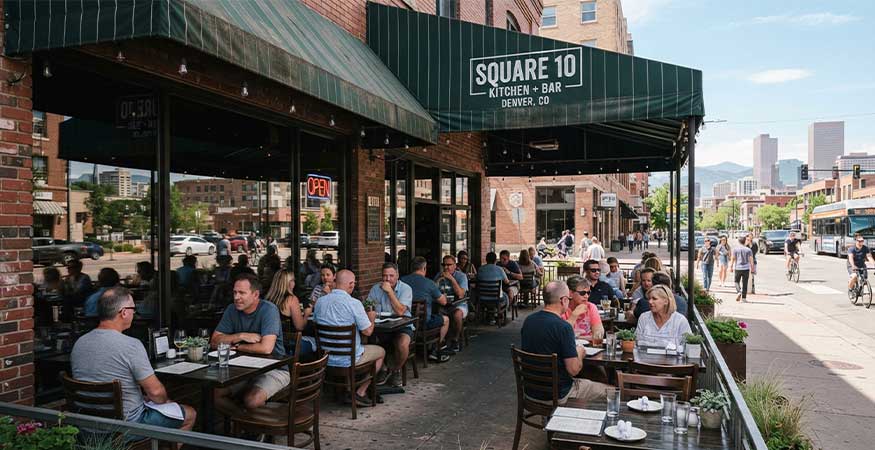
Patio dining buzzes at Square 10 Kitchen + Bar in Denver. City streets and skyline frame the lively scene.
6. Count the covered-seating revenue
For restaurants and cafes, covered outdoor seating is revenue infrastructure: sheltered outdoor space is valued at roughly $50 per square foot, and a covered patio adds table-turns in shoulder seasons the open patio loses. Run the math on your seat count before deciding the projection – the bigger awning frequently pays for the difference.
7. Plan the upkeep like the asset it is
A faded, grimy awning under-sells the business every day it stays up. Put the maintenance routine on the calendar at purchase: quarterly cleaning, an annual inspection, and photos each quarter to catch fading early. The commercial upkeep routine is in our maintenance rundown.
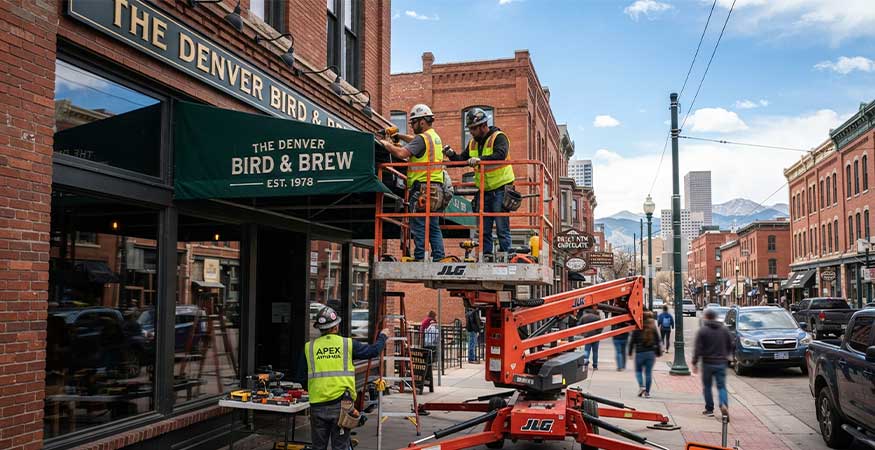
Workers elevate a new sign outside The Denver Bird & Brew downtown.
8. Buy the installer, not just the awning
Commercial work adds lead times, code review, after-hours install windows and lift equipment to everything on the residential checklist. The vetting method in our installer-hiring piece applies double at storefront scale.
Recent Post
How to Clean Aluminum Awnings: Step-by-Step Guide to Remove Dirt, Stains, and Oxidation Without Causing Damage
Aluminum awnings protect your home from the sun, rain, and...
Retractable Awning Maintenance Tips: Expert Guide to Cleaning, Protecting, and Extending the Life of Your Awning
A retractable awning is a valuable investment that adds shade,...
20 Deck Awning Ideas Perfect for Patio Season: Stylish Shade Solutions to Elevate Outdoor Comfort, Design, and Functionality
Deck awnings are one of the most effective upgrades for...
Can Retractable Awnings Be Installed on Vinyl Siding? Expert Guide to Safe Installation, Structural Support, and Best Practices
Retractable awnings can be installed on homes with vinyl siding,...


