
Outdoor Living Space Ideas: Design Around Shade, Not Around Sun<

Most outdoor living spaces look great but become unusable during peak sun hours. Best Awning Company recommends designing shade-first, using retractable awnings and strategic zoning to create spaces that work year-round in Colorado's intense high-altitude sun.
- Before buying furniture, map your sun exposure throughout the day - west-facing patios need serious afternoon shade, while south exposures benefit from retractable options that allow winter sun.
- Retractable awnings can cool spaces by up to 20 degrees and adding drop shades or wind panels extends usability by months on each end of the season.
- Zone outdoor areas like interior rooms with distinct dining, lounge, and grill spaces, then add integrated lighting to make the space functional after dark.
Design outdoor living spaces by prioritizing shade as the primary consideration rather than sun exposure. In high-altitude or sunny climates, unshaded patios become unusable during peak afternoon hours. Start by analyzing sun patterns throughout the day, then plan shade structures like pergolas, awnings, or shade sails to create comfortable zones that encourage daily use of your outdoor areas.
Most outdoor living spaces fail the same way: beautiful in photos, unusable at 3 p.m. In Colorado, sun exposure is the make-or-break design decision – 300 days of sunshine is the amenity, but at a mile of altitude it is also the thing that empties a west-facing patio all afternoon. The spaces that get used daily are designed shade-first. Here is how we think about it after 45-plus years of shading Front Range patios, decks and courtyards.
Start with the shade map
Before buying a single chair, watch your space for one sunny day: where is the sun at morning coffee, lunch, 3 p.m., dinner? That map dictates everything. West and southwest exposures need serious afternoon shade; south exposures want shade in July but sun in January – which is the argument for shade you can retract rather than build.
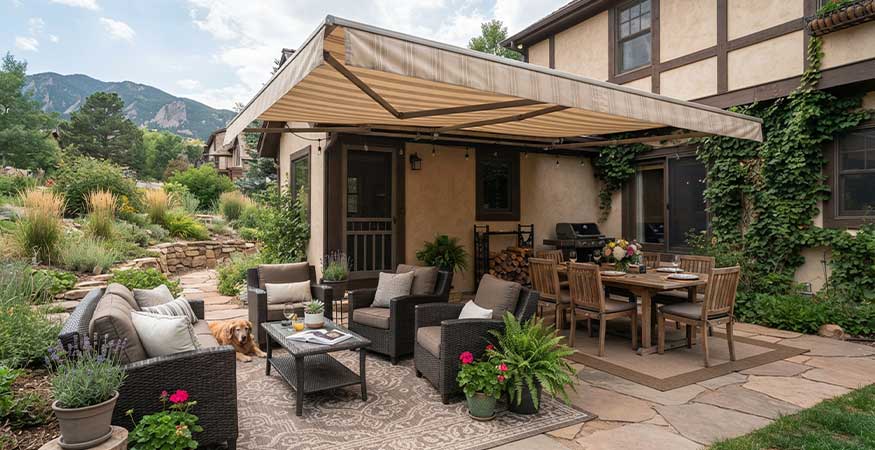
A cozy covered patio blends outdoor lounging and dining with scenic mountain views. Lush landscaping and climbing vines create a peaceful retreat.
Idea 1: The retractable-awning great room
A motorized retractable awning turns the whole patio into a convertible room – shade for the hot hours (up to 20 degrees cooler underneath), open sky for dinner, winter sun for the house when retracted. It is the highest-impact single move for most homes because it changes when the space is usable, not just how it looks.
Idea 2: Enclose a patio or deck – the room addition that isn’t
Here is the underused one: add drop shades or zippered side panels to a covered patio and you have functionally added a room to your house for a fraction of remodel cost. Wind protection alone extends the season by two months on each end – spring evenings and October afternoons that are perfect in still air and miserable in a breeze. Restaurants figured this out years ago; the same drop-shade systems work on homes. For three-season ambitions, add a patio heater under the covered area.
Idea 3: Zone the space like an interior
Outdoor rooms work when they have rooms: a dining zone under solid shade, a lounge zone at the shade edge where sun-chasers can migrate, a grill zone with task lighting and clearance from fabric overhead (see our grilling-under-canopy guidance). Anchor each zone with an outdoor rug and arrange seating for conversation, not for looking at the yard.
Idea 4: Light it for the second shift
The space that gets used after dark got lit on purpose. Awning-integrated LED strips give even ambient light with zero cords; downlights handle grill and reading tasks; a dimmer makes the same patio do dinner party and midnight quiet. Full options in our awning lighting guide.
Idea 5: Furnish for the climate, coordinate with the shade
Colorado outdoor furniture lives a hard life – UV, hail season, 40-degree daily swings. Choose fabrics and finishes rated for it, and coordinate colors with the awning overhead: the awning is the ceiling of the room, and it sets the palette. (An awning also extends the life of the furniture beneath it – shade is furniture protection.)
Idea 6: Greenery that earns its place
Planters at the shade line soften the transition from covered to open; climbing plants on a pergola edge cool by transpiration. Keep planting away from fabric contact – trapped moisture and organic debris are how mildew starts on awnings.
Idea 7: Think in seasons, not summers
The best Front Range outdoor spaces run March to November: retractable shade for summer, wind panels for shoulder seasons, a heater for the edges, lighting for early winter dusk, and winter decoration when the furniture goes away. Design for the year and the space stops being a summer amenity.
Where to start
If the budget picks one project this year: solve the shade problem first – it is the reason the space goes unused. Then lighting, then enclosure, then furniture. We do free on-site assessments and will map your exposure with you.
Best Awning Company designs shade-first outdoor spaces across Denver and the foothills – awnings, shades, enclosures, lighting. 303‑816‑2303.
Recent Post
How to Clean Aluminum Awnings: Step-by-Step Guide to Remove Dirt, Stains, and Oxidation Without Causing Damage
Aluminum awnings protect your home from the sun, rain, and...
Retractable Awning Maintenance Tips: Expert Guide to Cleaning, Protecting, and Extending the Life of Your Awning
A retractable awning is a valuable investment that adds shade,...
20 Deck Awning Ideas Perfect for Patio Season: Stylish Shade Solutions to Elevate Outdoor Comfort, Design, and Functionality
Deck awnings are one of the most effective upgrades for...
Can Retractable Awnings Be Installed on Vinyl Siding? Expert Guide to Safe Installation, Structural Support, and Best Practices
Retractable awnings can be installed on homes with vinyl siding,...


