
How Much Shade Will Your Awning Provide? Shade Projection by Time of Day in Denver
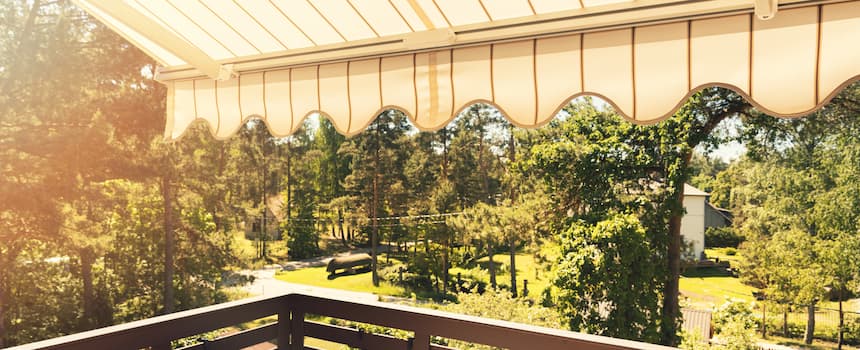
Shade in Colorado varies throughout the day due to the sun's position, affecting how much protection an awning provides. Understanding these changes helps homeowners optimize outdoor spaces for comfort and energy efficiency.
- In the morning, low solar angles create long shadows, maximizing shade coverage even from small awnings. Midday brings the sun's peak position, significantly reducing shade depth under any awning. Late afternoon sees shadows lengthen again, offering more comfortable outdoor conditions as the sun sets.
- Shade in Colorado shifts hour by hour because sunrise, sunset, and the position of the sun control how much protection an awning actually provides.
- In places like Boulder and Denver, the sun reaches its highest point in the sky at midday, creating short, compact shadows even when the awning itself is large.
The time of day significantly influences the shade an awning provides in Denver due to the sun's position. At midday, shadows are short and compact, while they lengthen during dawn and dusk. Factors like humidity, cloud cover, and seasonal changes also impact the comfort and effectiveness of the shade.
Shade in Colorado shifts hour by hour because sunrise, sunset, and the position of the sun control how much protection an awning actually provides. In places like Boulder and Denver, the sun reaches its highest point in the sky at midday, creating short, compact shadows even when the awning itself is large. As dawn transitions into full daylight and later slides into dusk, shadow length expands and contracts in ways that homeowners often overlook. During sunny conditions with low humidity, shade feels lighter and cooler, while cloudy skies or incoming rain change how light moves under the awning. Wind speed, snow accumulation, and seasonal atmospheric density also shape how comfortable the shaded area feels throughout the year.
At sunrise and the early hours of morning, the low angle of light creates long shadows stretching across the ground. By noon, the sun stands nearly overhead, cutting shade depth dramatically. As the day moves toward sunset, shadows lengthen again, similar to the dramatic transitions seen during astronomical twilight and nautical twilight, when the environment becomes dimmer even though the moon may still be visible. These natural cycles matter for families arranging outdoor spaces for children, for homeowners protecting patios, and for anyone using shade to manage heat around their property.
Because Colorado sits at a high altitude, the atmosphere filters less UV radiation, and sunlight intensity increases compared to lower-elevation regions. That means awnings respond differently to seasonal changes, varying cloud cover, and daily light patterns. Understanding these shifts helps homeowners plan energy efficiency, schedule cooling needs, and create outdoor areas that stay usable and comfortable no matter the season.
Why Sun Angle Matters More Than Awning Size
Most property owners assume that a larger awning guarantees cooler spaces, but the sun’s altitude tells a more accurate story. In Denver, the sun’s position shifts constantly from sunrise to sunset, and that angular change matters far more than the square footage of fabric. Even on a day that starts partly cloudy with a few clouds drifting over Lookout Mountain, the angle of incoming light determines whether your patio feels comfortable or overheated. As the length of day stretches or shortens across the seasons, shade patterns expand and contract, influenced not by awning size but by geometry and the movement of the sun itself.
At noon, when the sun sits high in the sky, its rays strike at an angle that produces short shadows and limited shade projection. Later in the afternoon, when storms may form along the Front Range, and visibility drops as the sun sinks lower, long shadows increase the usable shaded area beneath the same awning. Wind chill, dew point, and even the presence of a few clouds can shift the ambient conditions, but they don’t affect the core principle: shade depends on the relationship between your awning and the sun’s altitude.
Denver’s rapidly changing weather patterns play a role in comfort but not in the fundamental math of shadow projection. Whether conditions are calm or windy, whether the temperature swings or the sky stays partly cloudy, the angle of the sun is still the controlling factor. Homeowners who want effective heat control must prioritize the precise hours when their structure receives direct solar exposure, not just the size of the awning overhead.
By orienting and installing your awning to intercept sunlight at the angles that matter most for your property, you gain more usable outdoor space throughout the day. Shade performance becomes predictable, reliable, and optimized for real-world conditions—not just for the momentary look of a larger awning.
Morning, Midday, and Late-Afternoon Shade Patterns
Building owners in Denver can measure and predict shade patterns throughout the day because the sun’s position controls how shadows form and shift. Understanding these predictable cycles helps manage heat, comfort, and energy use more effectively.
Morning Shade (6 AM – 10 AM)
- As the sun rises in the east, it casts long shadows stretching westward.
- Low solar angles allow even small shade structures to create wide coverage.
- A 4-foot awning can produce up to 12 feet of shade around 8 AM.
- Morning hours offer the most efficient natural shading.
Midday Shade (10 AM – 2 PM)
- The sun reaches its highest point, often climbing above 70 degrees in summer.
- Shadows shrink significantly, minimizing shade coverage under any awning.
- A 4-foot awning that created 12 feet of shade in the morning offers only about 3 feet at noon.
- This is when buildings receive the most intense direct sunlight.
Late-Afternoon Shade (2 PM – 8 PM)
- As the sun moves toward the western horizon, long shadows return, extending eastward.
- West-facing walls get increased shade, while east-facing surfaces receive full sun.
- A 4-foot awning produces longer shadows again, similar to morning conditions.
- These hours often provide the most comfortable outdoor usage.
Practical Application for Property Owners: Commercial property managers can use these predictable shade cycles to improve building performance and reduce energy costs. Understanding when shade expands, or contracts, helps with:
- Temperature control timing
- HVAC scheduling
- Window treatment adjustments
- Outdoor space planning
- Solar panel placement
Shadow length always connects directly to the sun’s height above the horizon: lower sun angles create longer shadows, while higher sun angles shorten them.
How Altitude and Orientation Change Projection
Denver’s elevation of 5,280 feet shapes sunlight and shadow in ways that differ noticeably from coastal cities at the same latitude. The thinner air at this altitude allows roughly 25 percent more sunlight to reach the ground, creating sharper, darker shadows with higher contrast because less light scatters through the atmosphere. This intense clarity also affects how the sun behaves at midday. Denver experiences a slightly higher sun altitude—about 2 to 3 degrees more than sea-level cities—due to the way light bends while traveling through different air densities. As a result, shadows shorten more dramatically during peak daylight hours.
Building orientation adds another layer to how these shadow patterns behave. A south-facing structure sees its longest midday shadow in winter, when the sun sits low on the horizon. During the winter solstice, the shortest day of the year, that shadow can extend 2.8 times the height of the building, meaning a 30-foot structure casts an 84-foot shadow across the ground. Buildings that run east to west create shifting shade zones as the day progresses, with sharp westward shadows in the morning and long eastward shadows by late afternoon. These predictable patterns create warmer and cooler pockets around a property, guiding landscapers in plant placement and helping energy managers adjust heating, cooling, and window strategies to reduce operational costs.
Together, Denver’s mile-high altitude and the orientation of its buildings define how shadows form, how powerfully they contrast with surrounding light, and how long they stretch across surfaces from season to season.
Tools and Techniques for Predicting Real-World Shade
Digital modeling tools now calculate shadow behavior with accuracy levels within about five percent of on-site measurements, giving Denver property owners and designers reliable insight into how sunlight interacts with buildings. These technologies combine the city’s geographic coordinates, the seasonal path of the sun, and detailed 3D building models to illustrate how shadows shift from hour to hour and month to month. Software such as SketchUp with solar extensions, solar-engineering platforms like Helioscope and PVsyst, and sensor-based monitoring systems provide visuals and data that mirror real conditions closely. They factor in surface reflectivity, local weather patterns, and the way nearby structures influence light to produce predictions that match real-world environments.
Designers rely on these simulations to make informed decisions about building orientation, window placement, and the size and shape of awnings or architectural shading features. By comparing on-site readings with digital projections, property owners get accurate expectations for comfort, daylighting, and long-term energy performance. These evaluations help clarify how much sun a patio receives in midsummer, whether afternoon shadows from neighboring structures affect solar panel productivity, and what shading strategies will keep west-facing interiors cooler during peak heat hours while still welcoming winter warmth.
The integration of satellite data, local climate records, and precise building measurements creates dependable shadow forecasts tailored to each location. This insight shapes landscaping design, outdoor living layouts, and passive cooling approaches that naturally lower cooling costs and improve the usability of exterior spaces year-round.
Recent Post
How to Clean Aluminum Awnings: Step-by-Step Guide to Remove Dirt, Stains, and Oxidation Without Causing Damage
Aluminum awnings protect your home from the sun, rain, and...
Retractable Awning Maintenance Tips: Expert Guide to Cleaning, Protecting, and Extending the Life of Your Awning
A retractable awning is a valuable investment that adds shade,...
20 Deck Awning Ideas Perfect for Patio Season: Stylish Shade Solutions to Elevate Outdoor Comfort, Design, and Functionality
Deck awnings are one of the most effective upgrades for...
Can Retractable Awnings Be Installed on Vinyl Siding? Expert Guide to Safe Installation, Structural Support, and Best Practices
Retractable awnings can be installed on homes with vinyl siding,...


