
Awnings You Can Install Yourself? Read This First
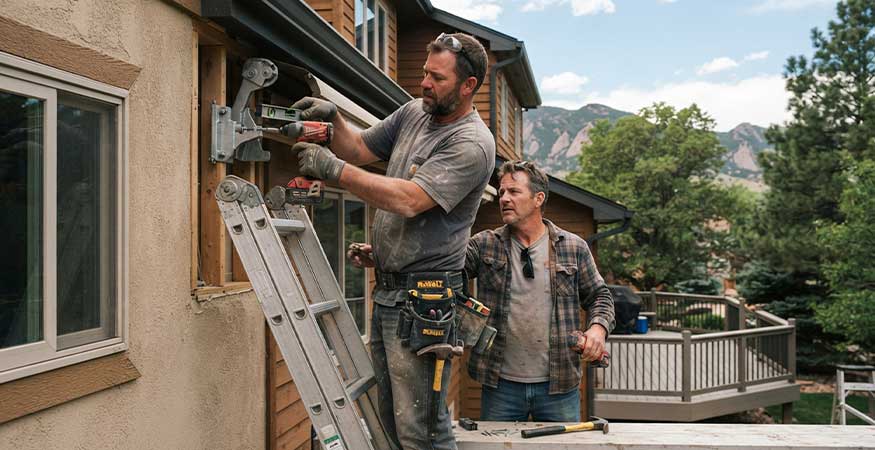
The page warns homeowners against DIY awning installation, arguing that even awnings marketed as easy to install require professional help due to their weight and complexity.
- Retractable awnings can weigh 150 to 350 pounds and are difficult to align and secure properly without training. Improper installation can result in damage to your home or personal injury.
- The page shares an example of a customer whose son installed an awning that ended up crooked and falling off the house - nearly damaging the soffit.
- Readers are encouraged to hire experienced professionals who use quality materials and proper procedures rather than relying on DIY efforts or subcontractors from big-box stores.
Installing awnings yourself can enhance your outdoor living space by providing shade and protection from the elements. It allows for customization to fit your home’s aesthetic and can save money on labor costs. Additionally, DIY installation offers a sense of accomplishment and control over the project.
Every spring the big-box stores stock awning kits with a friendly box photo: two smiling homeowners, one ladder, an afternoon. We spend part of every summer repairing what happens next. This is not a sales scare – there is one DIY awning job we will tell you to go ahead and do – but the box photo leaves out four things you should know before your weekend gets ambitious.
1. The weight is not a two-person number
A 20-foot retractable awning weighs 150 to 350 pounds, and the weight arrives as one long, awkward, spring-loaded beam that must be held level against a wall at ladder height until every bracket is set. Two people on ladders holding 300 pounds overhead is not a project; it is an incident report waiting for a gust.
2. The springs are loaded before you open the box
Lateral arms carry serious spring tension from the factory – enough to snap a broom handle, which is roughly what an arm does to a hand in the wrong place. Tension adjustment without the right tools and training is where the worst DIY injuries happen. There is no partial credit here: the arms are either handled correctly or they are dangerous.
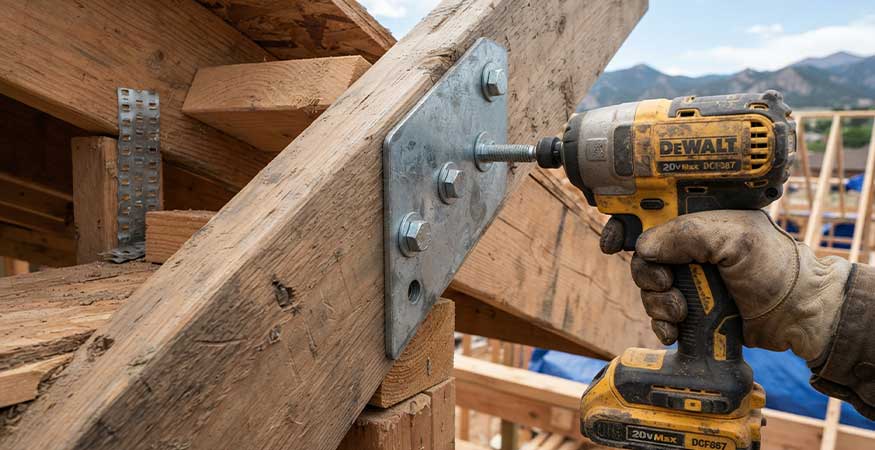
Securing a heavy timber connection with precision and power.
3. The wall is the real job
An awning does not hang on siding – it hangs on the framing behind it. Every failed DIY install we repair shares a cause: lag bolts into siding, sheathing or stucco with nothing structural behind them. The first hard gust turns that into pulled anchors and a bent frame, and sometimes into wall damage that costs more than the awning did. Our installs bolt into rafters or studs, torqued and sealed at every penetration – it is why we can say that in 45 years we have not had a roof or wall leak from an installation. Finding framing behind stucco or brick veneer, and sealing what you drill, is the actual skill in this trade.
4. The warranty fine print
Most major awning brands tie their warranty to authorized installation. A DIY install of a top-tier unit can void coverage on the day it goes up – the savings on labor buys the risk on the whole product.
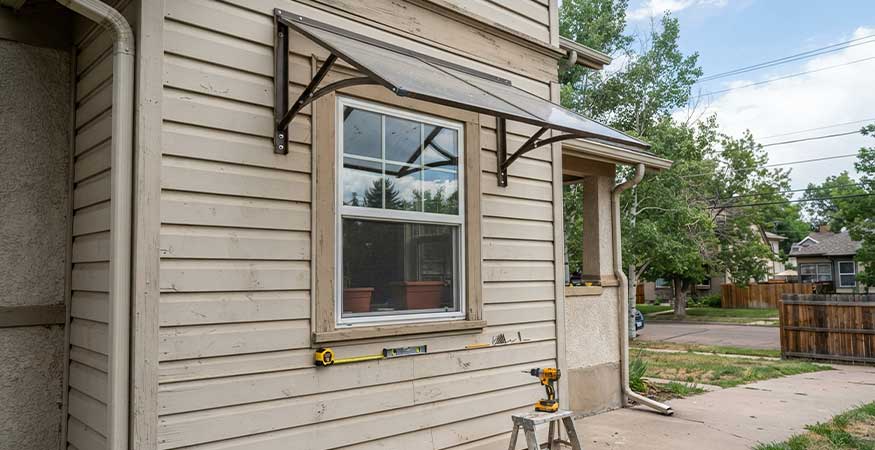
A newly installed window awning adds shade to this home exterior. Tools below suggest ongoing renovation work.
The DIY that makes sense
A small fixed awning over a ground-floor window or door is a fair weekend job for a capable homeowner: light enough to lift safely, no spring tension, and the framing is findable with a stud finder. If that is your project, take it on – anchor into framing, seal every hole, and enjoy it. The line sits exactly where weight, springs or height enter the picture.
What you get with installer-done work
Since 1979 our crews – employees, not subcontractors – have measured, mounted and sealed awnings on every wall type the Front Range builds: brick, stucco, frame, log and steel. The install carries the product warranty intact, the mounting matches the wall, and the wind sensor gets set for your site rather than the factory default. The measurement and the written quote cost nothing: 303-816-2303.
Recent Post
How to Clean Aluminum Awnings: Step-by-Step Guide to Remove Dirt, Stains, and Oxidation Without Causing Damage
Aluminum awnings protect your home from the sun, rain, and...
Retractable Awning Maintenance Tips: Expert Guide to Cleaning, Protecting, and Extending the Life of Your Awning
A retractable awning is a valuable investment that adds shade,...
20 Deck Awning Ideas Perfect for Patio Season: Stylish Shade Solutions to Elevate Outdoor Comfort, Design, and Functionality
Deck awnings are one of the most effective upgrades for...
Can Retractable Awnings Be Installed on Vinyl Siding? Expert Guide to Safe Installation, Structural Support, and Best Practices
Retractable awnings can be installed on homes with vinyl siding,...


